
Morning chaos,
meet calm.
Oh No! Lunchbox helps parents track what kids actually eat, spot patterns over time, and plan meals that work — with fast AI photo recognition built for real life.

Available in Ireland, UK, Netherlands, Denmark, Sweden, Norway, Australia & New Zealand.


Three steps to lunchbox clarity
No complicated setup. No typing every ingredient. Just snap a photo and let the app do the work.
Snap
Take a photo of the lunchbox before school. Our AI recognises the foods instantly — no typing needed.
Track
See what came back eaten, untouched, or tried. Build a clearer picture of each child's real preferences over time.
Plan
Use food history and insights to plan meals that actually get eaten. Less waste, less guesswork.
The picky eater problem is real
You pack with care. It comes back barely touched. You try something new — rejected. You fall back on the same safe options.
"I don't know what to pack anymore." Every morning becomes a guessing game between what they'll eat and what's nutritious.
"So much food gets wasted." It's hard to see what works when you're juggling everything else.
"Each kid is different." What one child loves, the other won't touch. Keeping it all straight is exhausting.
Oh No! Lunchbox turns that overwhelm into clarity. Track real patterns, see what actually gets eaten, and stop guessing. We built this because we needed it too.

Designed for the morning rush
Clean, fast, and simple enough to use with one hand while pouring cereal with the other.


Everything you need, nothing you don't
Built by parents who were tired of the morning rush. Every feature solves a real problem.
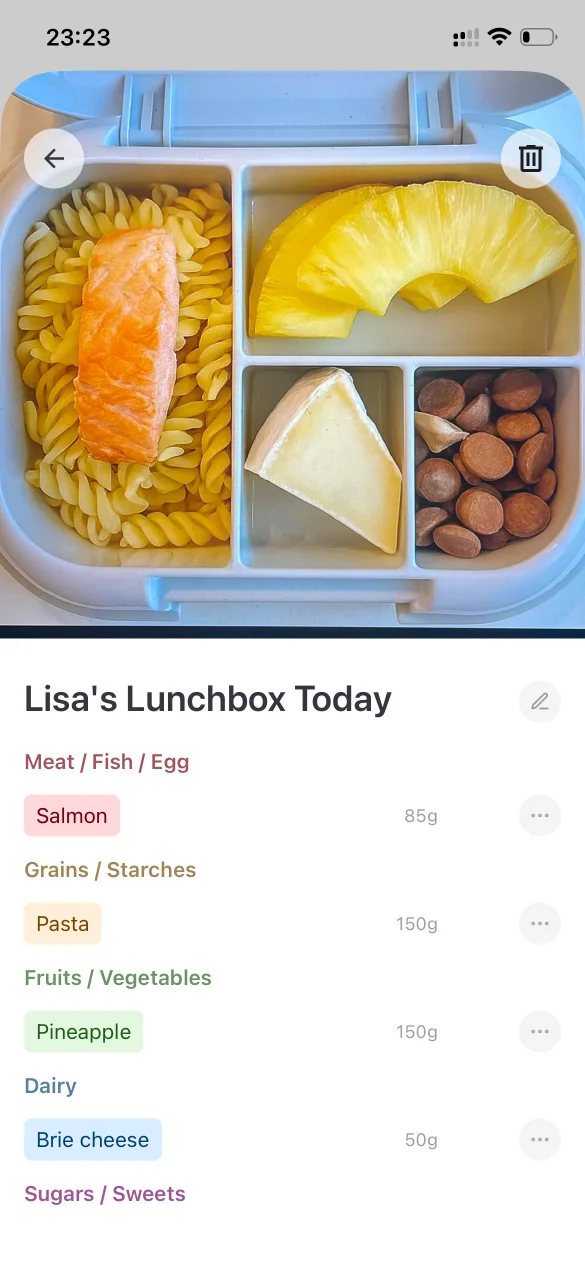
AI Food Recognition
Snap a meal photo and let AI recognise the foods instantly. No database search, no manual entry.
Per-Eater Profiles
Keep each child's meals, food history, and evolving preferences separate and easy to understand.
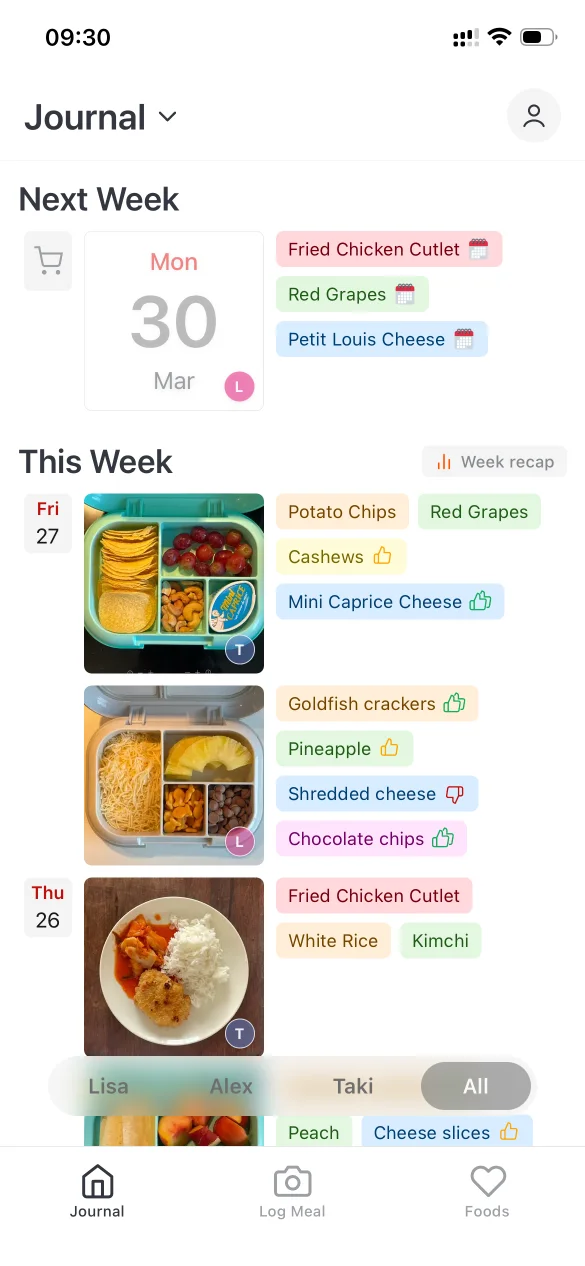
Meal Photo Journal
Build a visual history of meals, lunchboxes, and what actually came back eaten.
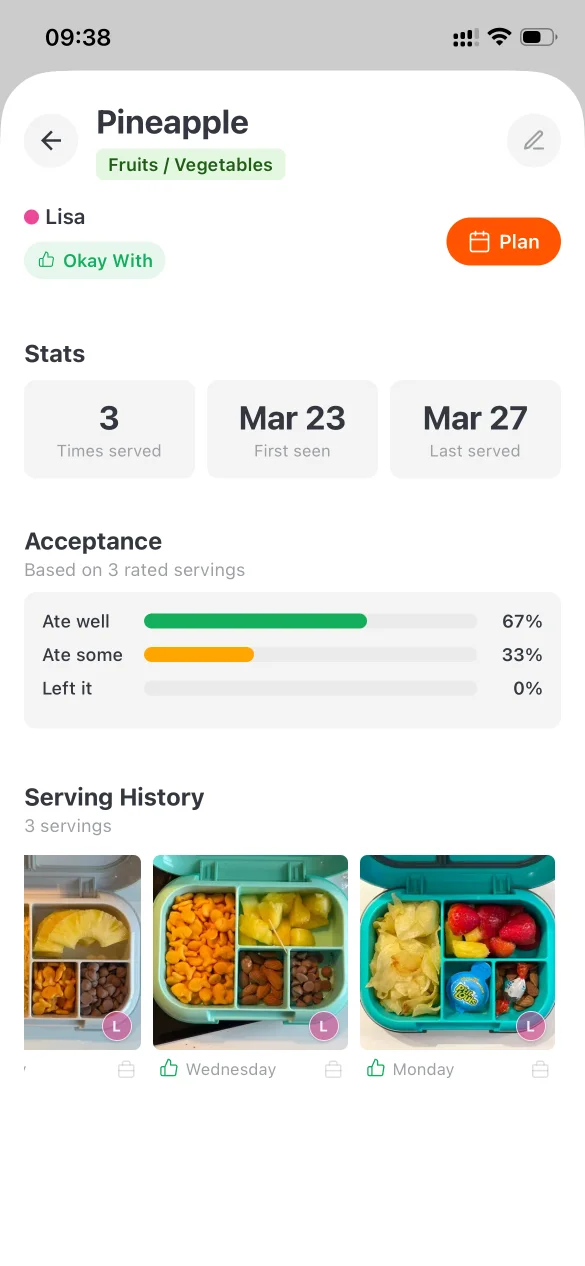
Food Lists That Evolve
Auto-build food lists from real meal history, so you can see favourites, repeats, and foods to revisit.
Weekly Insights
Get a simple weekly recap of variety, acceptance, and food patterns — without digging through old meals.
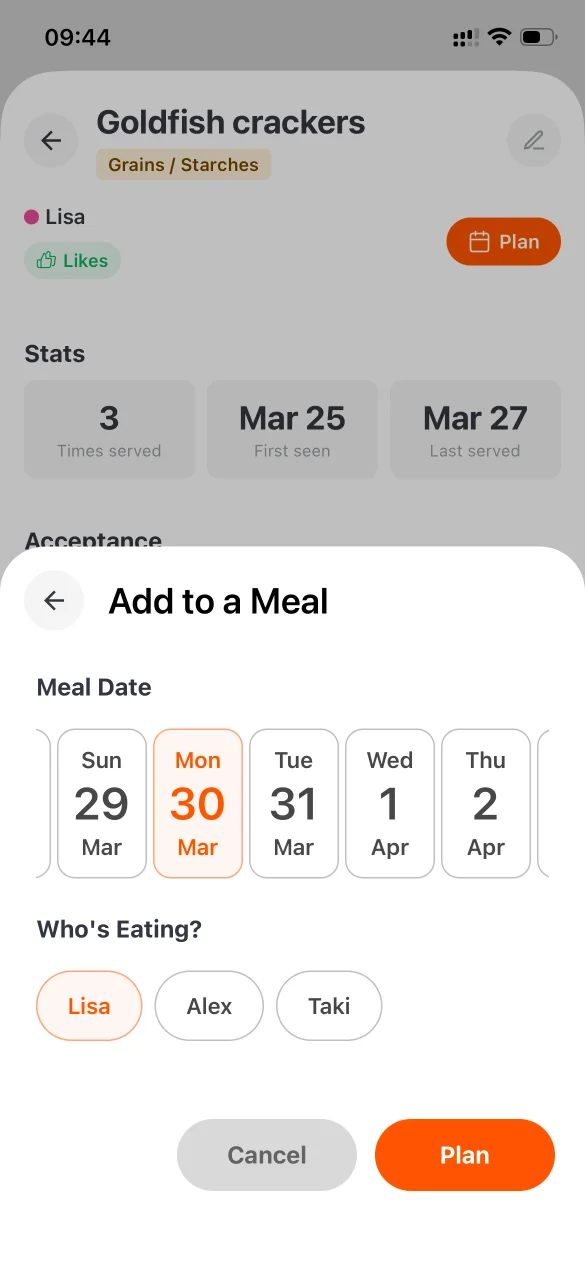
Meal Planning
Plan future meals from what actually worked, instead of guessing what to pack next.
Privacy First
Your family's food data stays yours. No ads, no data selling, and privacy built in from the start.
Built for Real Family Life
Lunchboxes, home dinners, multiple children, different tastes — one simple system that keeps it all together.
What parents keep telling us
A few composite reactions based on real family patterns, beta feedback, and everyday use.
“What I value most is the shared history. My husband and I both prepare meals, and before this we were constantly repeating things, forgetting what had already been tried, or unintentionally undoing each other's efforts. Having one place that shows what was packed, what came back, and what actually worked makes coordination much easier.”
“We used to keep a paper list of foods our kids liked, disliked, or might accept, but it was always out of date. Tastes changed, we forgot to update it, and it never really reflected what was happening. What’s useful here is that the food list builds itself from real meals, so it becomes much more accurate — and sometimes genuinely surprising.”
“It hasn't magically solved picky eating, but it has removed a lot of the panic. That matters more than I expected. My kids are still selective, and some mornings are still chaotic, but now I'm not starting from zero every day. I can see what has worked before and make decisions from there.”
“The separate eater profiles are probably the most useful part for us. One child is adventurous, the other gets stuck on a few safe foods and then suddenly rejects one of them. Most tools treat children as one category. This is the first one I've used that actually reflects how different they can be.”
“I originally thought I'd use it just for school lunches, but it's become more of a family food log. We use it for lunchboxes, dinners at home, and sometimes even restaurant meals. It helps me remember what we've been doing, notice when we're stuck in a loop, and feel a bit more in control without overthinking everything.”
Ready to take the guesswork out of lunch?
Download Oh No! Lunchbox and start building a clearer picture of what your kids actually eat — so planning gets easier, one meal at a time.